Informative
How to protect road gullies from silt
Read more ›

17th December 2025Informative

The UK is experiencing an undeniable shift in weather patterns, making stormwater management a growing and critical challenge for developers, engineers, and site managers alike.
Without the right drainage in place, the fallout of sudden downpours and extreme weather can be serious – flooding on site, overburdened public sewers, pollution risks, and damage to property and infrastructure.
Sites need robust, well-designed systems that regulate how water leaves the development. This is where flow control chambers make all the difference.
In this guide, we’ll explore flow control chambers, focusing in particular on orifice-plate flow control units. We’ll explain how they work, why they matter, and how our high-performance Oriflo range delivers the reliability and compliance you need to meet modern stormwater challenges, sustainably and efficiently.
To understand how an orifice flow control chamber works, it helps to look at its role within today’s wider approach to managing surface water and the principles behind it.
SuDS reflect a more responsible way of dealing with rainfall. Instead of the old-fashioned ‘collect it and move it on quickly’ mindset, SuDS aim to slow water down, store it safely, and allow it to drain more naturally.
A well-designed SuDS scheme typically focuses on three key principles:
Flow control chambers sit right at the heart of this process. They regulate the rate at which water leaves features such as attenuation tanks, ponds, swales, or permeable paving, ensuring the downstream network isn’t hit with sudden, high-volume flows.
An orifice flow control chamber is one of the simplest and most reliable ways to regulate outflow rates in a SuDS system. Put simply, it’s a chamber built to control how quickly stored stormwater is released back into the public drainage network, usually in line with a specified, permitted outflow rate.
The key component is the orifice plate: a robust plate with a precisely engineered opening. This accurately calculated hole size does the important work of slowing the water down.
By designing the orifice to the correct size, engineers can ensure that even during heavy storms, outflow stays within the limits set by the local authority. The result is a predictable, controlled outflow that protects downstream sewers and reduces the risk of flooding.
Orifice flow control chambers are simple, passive systems. They rely on basic physics rather than power, electronics, or moving parts, which makes them both reliable and low maintenance.
Their operation is based on a key principle of fluid dynamics called hydraulic head, which refers to the energy or pressure that drives water through a system. It’s influenced by the difference in water levels between two points.
As stormwater builds up in the upstream storage area, the increasing water level inside the chamber raises the hydraulic head. The taller the column of water above the orifice, the greater the pressure acting on it, and the more water is naturally pushed through the opening.
The crucial point is that the orifice plate has been carefully sized to meet the site’s approved flow limit. Even when water levels rise significantly during heavy rainfall, the small, fixed opening ensures the outflow never exceeds what the downstream network can safely handle.
This steady, moderated release prevents sudden surges from entering the public system and protects local infrastructure from being overwhelmed.
Orifice chambers support modern stormwater management in three key ways:
By slowing the movement of stormwater, the chamber spreads runoff over a longer period. This reduces peak flows during intense rainfall, helping to protect downstream areas from flooding and easing pressure on urban drainage networks.
In many regions, surface water and foul water share pipework in combined sewer systems.
When too much stormwater enters too quickly, these systems can spill untreated wastewater into rivers or coastal waters.
By regulating how quickly water leaves a site, orifice chambers prevent this kind of surge, supporting cleaner waterways and reducing pollution risks.
Developments must meet strict flow rate limits set by local authorities and environmental regulators.
A correctly specified orifice flow control chamber offers a robust, predictable way to stay within those limits, providing confidence that the site is operating responsibly and in line with environmental standards.
Orifice flow control chambers are straightforward and dependable, but their simplicity can create one major challenge on sites.
Because an orifice plate relies on a restricted opening to manage flow, it can be vulnerable to the kinds of materials that often travel with stormwater, things like leaves, litter, silt, and rags.
If that opening becomes blocked, the chamber can no longer regulate water effectively, which may lead to upstream flooding and undermine the whole purpose of the system.
This is why it’s important to understand the difference between unprotected and protected orifice designs. Each option has its place, depending on the water quality entering the system and the level of maintenance a site can realistically accommodate.
Unprotected chambers use a simple flat plate with a cleanly cut opening.
They offer several advantages:
Protected models are designed to tackle the blockage issue head-on.
These systems include a protective structure that prevents larger debris and coarse sediment from reaching the critical control point of the flow control. Water continues to pass through freely, but the materials most likely to cause problems are kept back.
Choosing a protected design offers clear, practical benefits:
For sites with higher debris loads or where maintenance access is limited, the protected chamber offers a robust, reliable, and low-maintenance solution.
Our Oriflo range offers reliable, certified flow control solutions that are easy to install, robust, and built to meet modern regulatory standards.
Designed for flexibility, these chambers help engineers manage stormwater effectively, whatever the site requirements.
These chambers are designed for systems where incoming water is pre-screened or debris levels are low. Lightweight, durable, and easy to install, they offer reliable flow control without additional filtration.
Available variants:
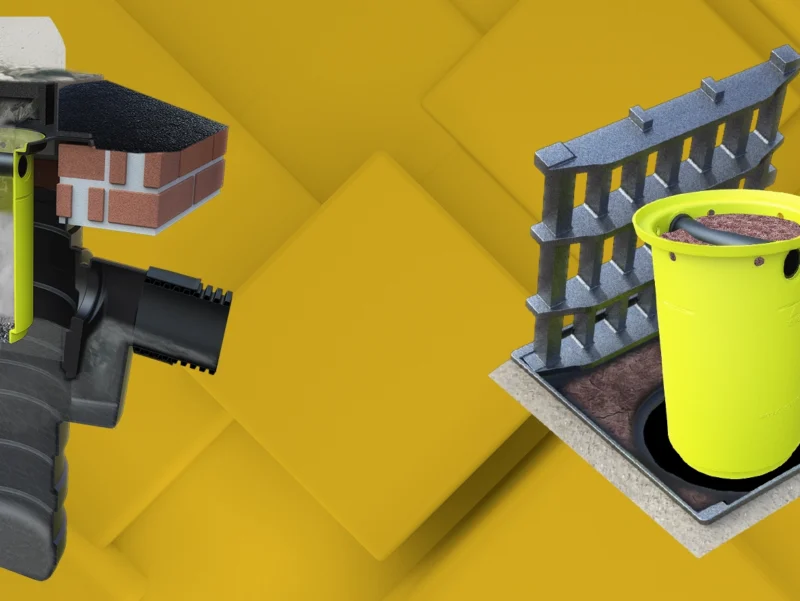
These units include an integrated Blok filter, removing silt and debris down to ~30 µm to prevent blockages and reduce maintenance. Ideal for sites with moderate to high debris loads.
Available variants:
The Oriflo range offers a combination of performance, reliability, and practical design features that make it a trusted choice for modern stormwater management.
The benefits include:
While orifice flow control chambers are a go-to solution for many SuDS designs, it’s worth taking a moment to consider how they compare with other flow control options.
Looking at the drawbacks of common alternatives helps highlight why a well-engineered orifice chamber, especially a protected model, is often the most practical, sustainable choice.
These clever devices use vortex action to handle high flow rates and even offer a degree of self-cleaning. But they come with some challenges:
On the face of it, these are the most basic flow control solutions, simple and inexpensive, but those advantages come with significant downsides:
Choosing the right flow control setup has many benefits for your business. These include:
Controlled stormwater discharge is a legal requirement, and planning authorities take it seriously. Using accredited, reliable products like the Oriflo range helps ensure your project meets key obligations, including:
Beyond the regulations, a well-designed orifice system brings real, on-site advantages:
Good water management isn’t just a box-ticking exercise, it’s a visible sign of responsible environmental practice. Choosing effective, long-life flow control solutions strengthens your ESG reporting by showing:
For projects where dependable performance is a must, our Oriflo range offers a straightforward, engineered solution.
If you’d like guidance on choosing the right chamber for your site, our team is here to help with practical, project-specific advice.
You can also browse the full Oriflo range, with all sizes and protected/unprotected options, to find the most suitable fit for your installation.